

Get Familiar: HUNNA
Get Familiar: HUNNA
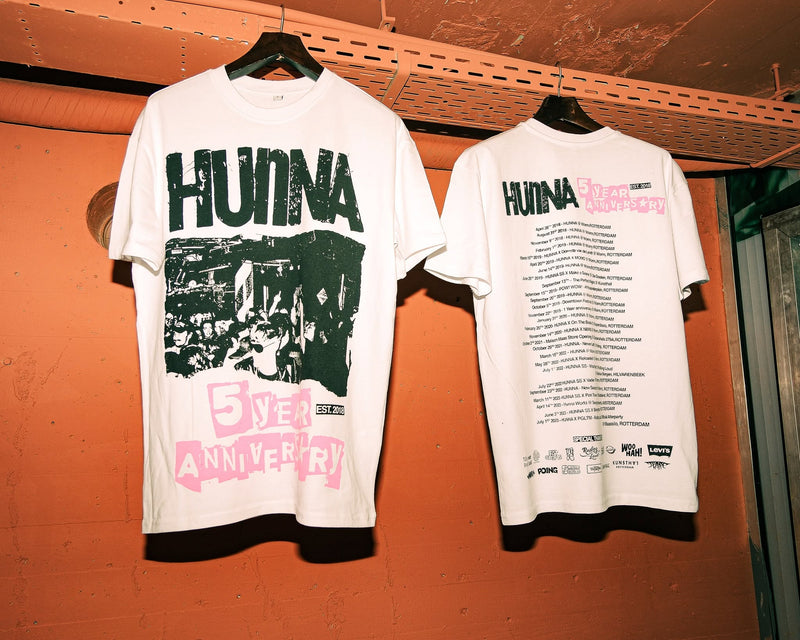
Words by Passion DEEZ If the music you want to hear isn’t getting played, throw the party yourself! That was the starting point for HUNNA, the Rotterdam platform that has been making room for underground hip-hop and trap since 2018. What began with friends putting together an idea in a bedroom has grown into a collective, a soundsystem and a community with an ear for what comes next. Along the way, they’ve hosted early shows for local artists, released their own edits and taken on a sold-out Rolling Loud afterparty.With another Amsterdam Dance Event edition approaching, HUNNA are connecting with Los Angeles collective Trap Rave while continuing to give opportunities to people from their own dancefloor. We caught up with Lewis and Nadim to talk about Rotterdam, hearing your favourite tracks through big speakers and what it takes to keep an independent party going. Get familiar below.For those getting familiar, who is behind HUNNA, and what brought you together?Lewis: I’m the founder of HUNNA. I started HUNNA in 2018 together with two friends, Boris and Nahom. At the time, it was simply a club night where we wanted to create space for a specific side of hip-hop that we loved but couldn’t really experience anywhere else in the city. We wanted to bring a new sound to Rotterdam and create a place for music and artists that we felt weren’t being heard enough.Nadim, Zeus and Guap became part of HUNNA pretty early on. They were the first DJs I reached out to because I felt like they shared the same taste, energy and interests we had with HUNNA. Selim, another DJ from Rotterdam, was also part of the team in those early days shoutout to him as well, haha. Mas came in on the visual side as our graphic designer, his work became a huge part of HUNNA’s identity. Everyone had their own strengths and interests and I wanted to create more space to explore those and develop ourselves through HUNNA as well. It became less about everyone just having one specific role and more about giving everyone the opportunity to grow into different sides of what we were building together. Around 2023, that really started to take shape and we began moving much more as a collective, with everyone bringing their own ideas, skills and perspective to HUNNA. I think that’s really what HUNNA has grown into not just a group of DJs or people putting on parties, but a collective where everyone brings something different to the table. That’s still how we operate today.Nadim: The team changed along the way. The other two co-founders eventually went on to do other things, and over time I became more involved in running HUNNA alongside Lewis. Today, Lewis and I are probably the main driving forces when it comes to keeping things moving day to day, while everyone in the wider team contributes from their own role and expertise. There’s a lot we work on together.What brought us together was that underground hip-hop and trap sound. We were enjoying it ourselves and thought it deserved a platform in Rotterdam.Lewis: It’s always been about spotting new things: new sounds, new artists and new DJs. We’re always looking for something fresh.Take us back to that first party. What was missing in Rotterdam’s nightlife?Lewis: Boris and I were really into a trap at the time. We went to a lot of parties together, but we rarely heard the music we actually loved being played. At some point we just thought: if nobody’s really doing it, why don’t we throw the kind of party we would want to go to ourselves?Around that time, we got an opportunity at WORM to help with some of their events. After working with them for a while, they asked if we’d be interested in creating something of our own. That gave us the opportunity to turn the idea into something real. I remember going over to Mas’ place, we basically sat in his bedroom putting the whole thing together the idea, the feeling, what we wanted it to look like. That’s really where the first version of HUNNA started taking shape.It came from something very simple: we felt like a certain sound and energy were missing in Rotterdam, so instead of waiting for someone else to create that space, we decided to create it ourselves.Nadim: There had been a lot of hip-hop parties in Rotterdam, but some had died down. Then this new wave of hip-hop came up, and we felt it wasn’t getting the attention it deserved.Lewis: A lot of the other parties focused on the mainstream hip-hop sound. We wanted to play things you weren’t hearing at club nights that much.Where does the name HUNNA come from?Lewis: We were already listening to artists like Chief Keef and that whole Chicago drill era before HUNNA started. For us, that period represented a shift in hip-hop a raw energy and sound that felt completely different from what we were hearing at most parties in Rotterdam.That energy was a big part of what we wanted to showcase with HUNNA. Not just Chicago drill, but that whole new generation of hip-hop. So when we started thinking about a name, it naturally came from that world. You would hear “three hunna” around Chief Keef and that era, eventually we landed on HUNNA. Over time, the name took on a meaning of its own for us too: staying true to your taste and what you believe in.Nadim: There’s also the slang term in the Netherlands, responding to someone with “honderd” to say you understand. That was part of the idea too.You describe HUNNA as a new generation of sound. What does that sound like today?Lewis: The sound of HUNNA keeps moving. Right now, there’s an interesting crossover happening between trap and electronic music, and that’s where we’re at today. At the same time, we’re opening up the sound more and creating something that connects with a wider crowd.Nadim: Trap is still a big part of hip-hop. A lot of the newer artists have that punkish, rockstar energy. The guys we’re working with, Trap Rave, do afterparties in LA for artists coming out of that world.We’re also trying to make the party accessible to people who just want to dance. We combine the more iconic hip-hop sounds with newer music and a more eclectic approach. We want people to enjoy themselves and dance while still hearing that new generation of hip-hop.You’ve given early opportunities to artists such as ADF Samski and Elijah Waters. What makes you want to book someone before they have a wider audience?Lewis: We look for artists who stay true to what they believe in, have their own sound. It’s not always about how big someone is, but about the potential, authenticity and energy we see in them. Nadim: It’s also about being in touch with what’s new and what we enjoy. Both of those artists are from Rotterdam. When we see that potential, it motivates us to give someone a platform where they might have one of their first shows. Samski’s first real live show in Rotterdam was at HUNNA.Lewis: And we have that same approach with DJs.Nadim: We want to give people opportunities early. A lot of it comes from being connected to the people around us and hearing what they’re doing.Are there any performances from those early years that really stick with you?Nadim: The ADF Samski show was iconic. He was just coming up and he arrived with no DJ and no USB stick. Me and Guap, one of the guys from our team, ended up playing his set through an aux cord. The songs were in his Notes app, so we connected his phone to the decks and played it like that.The event went really well. We were so locked in and having so much fun that it felt like this was going to last for years.Lewis: That was our one-year anniversary too. It was a really fun night, our good friend Bao G joined us as a guest DJ, which made it even more special.You’ve also released an edit pack. What made you want to put music out together?Lewis: We’re always trying to expand what we do with HUNNA. We all do things with music outside HUNNA, we wanted to bring that into HUNNA and release something together. We wanted to show people that we could make music from our own perspective.Nadim: What we enjoy about a good edit is taking a song you wouldn’t usually play as a DJ, whether that’s because of the BPM or the way it sounds, and making it work for you. We took three songs and made them more suitable for our sets.Alongside being a party, we’re a DJ collective and a soundsystem. We use those edits ourselves. They’re our perspective on club music.Who makes up HUNNA Soundsystem, and how does it work?Lewis: We started with Nadim, Luca, Guap and me on the mic. It’s changed a little since then. Right now, it’s mostly Nadim and me, but we switch things around with DJs who share the same ideas. Qu!nna, a DJ and really good friend of ours, also steps in a lot and has become a familiar part of the Soundsystem.Nadim: We have people on the bench! We reach out to different people when gigs come in. Sometimes we invite a DJ who knows and loves trap but doesn’t usually get to play it. That gives them the opportunity to play a trap set with us.It also lets us make the soundsystem fit the gig we’re doing. It’s an open team, but the core is Lewis and me.The Rolling Loud afterparty was a big moment for HUNNA. How did that come together?Lewis: When I heard Rolling Loud was coming to Rotterdam, I started thinking about how HUNNA could be part of it. We came up with the idea of hosting an official afterparty and wanted to collaborate with an organisation that shared the same energy and connection to the culture. We had always liked what Pretty Girls Like Trap Music were doing, so joining forces with them felt like a natural fit. At the same time, me and Nahom were responsible for the DJ programming for the festival itself. It was a big moment for us being involved both in the festival and through HUNNA with the official afterparty. It took a lot from the whole team to pull everything together, but it was a really special opportunity.Nadim: If you’re from Rotterdam and organise events, having a party at Maassilo is a bucket-list thing. Selling it out was huge for us. It was our biggest event yet.What did taking on a production of that size teach you?Nadim: We went from events of around 500 people to 3,000 at Maassilo. We’d never run a production that big, and we still did it independently. Rolling Loud supported us with promotion, but we didn’t receive money from them to organise the party. The financial risk was on us and Pretty Girls Like Trap Music.We were confident enough to go for it, and we learned so much about promoting and producing an event at that scale, dealing with different artists, live performances and DJs.It was also a catalyst for exploring other sounds that still connect to hip-hop. We had a second area with a more eclectic sound, including Jarreau Vandal and FS Green, and that worked really well. We kept doing that whenever there was room for it. We still use what we learned from that event today.You’ve worked with brands, venues and other collectives. Which collaborations have meant the most to you?Lewis: Last year we worked with New Balance and JD, which was our first own activation with a big brand, so I’m really proud of that one. We also work a lot with The O, another collective from Rotterdam. Those collaborations are always really dope because there’s a natural connection between us. And now working with Trap Rave from LA is exciting because it connects HUNNA to a whole new world outside of Rotterdam.Nadim: Trap Rave feels like a mirror image of HUNNA, but from LA. Working together feels natural.We’re also proud of Royal Rumble, our yearly King’s Night party with other partners. Last year we did it at Annabel for the first time. It wasn’t sold out, but it did really well, and we were proud of the lineup.Lewis: Royal Rumble feels like an extension of what we’re doing with HUNNA. We created it together with Sense and Feeble, bringing our different worlds together to build something that represents the wider hip-hop community.What is the hardest part of keeping an independent party going that people on the dancefloor don’t see?Lewis: You really have to push yourself because you’re doing it yourself. Sometimes you don’t immediately see what comes out of it and financially there isn’t always much there. You have to do it from a place of passion. The love of the music keeps me going, but also seeing what we’ve built over the years and the moments/memories we’ve created. It’s basically that same drive I have for my own music: that need to create, build something I believe in and keep pushing it forward.Nadim: This isn’t something we make a lot of money from. Every now and then we get a little bag, but it’s always been about having a creative outlet and giving people something we would want to enjoy ourselves.We’ve noticed that underground hip-hop and trap have become more of a niche again, especially in how many people are willing to come to events and concerts. We’ve had tougher times, but we kept our heads up. Staying focused on that sound is also what put us in a position to do the Rolling Loud afterparty. It made sense because we’d already been doing the work.Last year’s ADE party sold out. What stood out about that edition?Nadim: We did it with Global Warning, and it was so much fun. I think the people who came really got what they came for. It was a proper trap party, and we still sold it out. We also brought in some of that wider club sound to connect with the Amsterdam Dance Event setting.It’s one of the collaborations we’re really proud of. Shots Fired was behind Global Warning, and he’s one of our good friends and partners. He really pushes the newer trap sound, so it makes sense to bring him back for this year’s lineup too.This year you’re linking with Trap Rave. What do you want the lineup to say about HUNNA now?Lewis: We’ve brought everything we stand for into it. There are upcoming DJs, people from Trap Rave and names people already know.Nadim: A lot of the lineup comes from the collectives themselves, with HUNNA Soundsystem and Clover and Sakura from Trap Rave.We also wanted to give someone who has been coming to our parties for years her first ADE booking. She knows what we stand for and understands the music we’re trying to share with our audience. We have a lot of faith in her talent.Lewis: She also started her own party, Get Out, in Utrecht, where we’ve played before. It makes sense to give that opportunity back to her too.Nadim: Then there’s DJ iPad Kid 2001. He’s a serious DJ, but he brings a sense of humour to his sets with sound bites and other funny moments, while still having great song selection. We really enjoy that, and he’s part of our community as well. There’s also a special guest still to be confirmed.You’re also doing a pre-party before the club night. What can people expect?Nadim: We’re working with a fragrance store on a Wednesday pre-party. People can come and hang out, grab a drink and vibe with us before we go into the night programme.Lewis: It’s free. You can just pull up.Nadim: If it’s full, you might have to wait outside, but everyone is welcome to come by.Looking beyond ADE, where do you want to take HUNNA?Lewis: We’d love to explore more international collaborations and see what can grow from connecting HUNNA with different scenes outside of Rotterdam. At the same time, the core stays the same: giving the new generation a platform to express themselves through their own sounds and ideas.Nadim: We want to expand the ways we can offer that platform. We’re building our social media into somewhere we can share music, talk about artists and interact with our audience more, alongside promoting events.We’re also interested in community events, DJ lessons and marketplaces where upcoming Rotterdam brands and people we support can show their work. We’re figuring out how to keep giving space to the music, DJs and artists we really fuck with as clubbing changes.Lewis: We’re interested in working with cultural spaces where we can connect music with film, storytelling and other creative disciplines.Nadim: We want to broaden our hip-hop horizons. That could mean curating films or creating nights where people can enjoy different kinds of art and music. We want to build more of a communal hub in Rotterdam. We care a lot about the city and think it has so much more to offer than people sometimes realise.Lewis: Basically, expand the HUNNA world!For someone coming to their first HUNNA night this ADE, what do you want them to leave having experienced?Lewis: Hopefully people leave HUNNA having discovered something new an artist, a DJ, a sound or even a community they didn’t know before. We want people to feel connected to what’s happening and feel like they’re part of it, rather than just watching from the outside. That sense of discovery and belonging is a big part of what HUNNA is about.Nadim: If you already love hip-hop and trap, I want you to leave thinking, “I always listen to that song, but I’ve never heard it in the club.” That’s why I started DJing. I wanted to play music I really enjoyed, that I never heard in clubs, and blast it over some big-ass speakers.If you listen to trap, expect a lot of your playlist to get played at HUNNA. I hope you leave satisfied, having heard the songs you wanted to hear.From a bedroom idea to an international link-up, HUNNA are still following the same instinct: give the music they love somewhere to live and bring their people with them. Catch them during Amsterdam Dance Event as they connect with Trap Rave for another night of new discoveries and familiar tracks through big speakers. Keep an eye on HUNNA’s channels for the full event details.